Showing posts with label The Water Knife. Show all posts

Tuesday, December 15, 2015

Top Ten Books of 2015

I'm trying to be more consistent in my blog posts, so I've decided to take part in Top Ten Tuesday, hosted by The Broke and the Bookish. This week's theme is...

Top Ten Books of 2015 - The best books I read this year
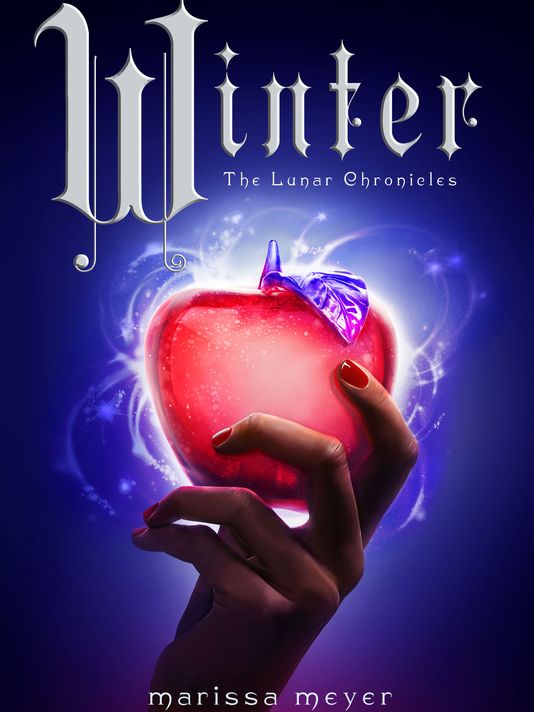
1. Winter - by Marissa Meyer
This is the latest book I've read to make the list, and it really was great. I only started reading the Lunar Chronicles earlier this year and didn't have as long of a wait for the final book, but it still felt like forever. Winter is a very fitting conclusion to a fantastic series and if you haven't read it yet, you really should!


2. None of the Above - by I.W. Gregorio
I just reviewed this book, but I can't emphasize enough how important I think it is. I'm all for LGBT+ themes in novels and None of the Above is fairly unique in featuring an intersex protagonist. This book manages to merge contemporary, YA fiction (complete with high school drama) with a touching, but also very educational, story about what it's like to suddenly discover you are intersex.


3. Simon vs. the Homo Sapiens Agenda - by Becky Albertalli
Another LGBT+ book that I cannot say enough good things about. Simon is a great protagonist and so funny as a narrator. This book has an important message, but it manages to come across as a fun, light read at the same time. 


4. His Majesty's Dragon - by Naomi Novik
I haven't quite finished my review of this book, but I am seriously obsessed with the Temeraire series. Combining the Napoleonic Wars with dragons? It´s genius! On top of that, the dragons are extremely intelligent and have their own place as characters in the book. Novik's representation of dragons really sold this book for me.


5. Skellig - by David Almond
I never actually reviewed this book, but I really did love it. I found this when I was making an effort to read more of the j-fiction section at my library. Skellig is the perfect example of magical realism for kids. I also highly recommend the audiobook, narrated by the author.


6. The Water Knife - by Paolo Bacigalupi
I went into this book not even realizing that it was a science fiction novel and it really exceeded my expectations. The science in this book is rock solid, and that's one thing I really look for in science fiction. On top of that, the characters in this book are so well developed and the plot moves along at a great pace.


7. Monstrous Beauty - by Elizabeth Fama
Another book that I really underestimated. I was expecting a fun, YA novel with mermaids and was impressed by how mature the story is. And really, this book tells two, interwoven stories - with one plotline taking place in the modern day and another set in the late 19th century. I was really impressed by Fama's beautiful writing and how well she transitions between the two time periods.


8. The Diviners - by Libba Bray
This book has all the fun of 1920's New York and all the creepiness that comes with a supernatural serial killer. The language in this book really brings out the 1920's setting and the audio book is amazing. The Diviners is definitely not a horror novel but is plenty spooky nonetheless. Also an honorable mention to the sequel Lair of Dreams.


9. The Raven Boys - by Maggie Stiefvater
This book, and the whole series so far, is amazing! Great characters, plenty of mythology, and a romance that I can totally get behind. Would more could I want? Just the next book....


10. Because I Am Furniture - Thalia Chaltas
I read this book for a young adult services class and never got around to a review, but it really stuck with me. The story of Anke and her family trying to deal with an abusive father is absolutely heartbreaking. This is a novel in verse, which I don't usually read, but there are some really beautiful sections in this book.


Wednesday, November 25, 2015

The Water Knife - by Paolo Bacigalupi

My Rating:                  


Despite working in a library in the same state as the author, Paolo Bacigalupi, I had never heard about The Water Knife. Then a couple of friends suggested we read it for a book discussion. From their very brief description I went to pick it up from the library thinking it was some sort of realistic fiction novel about current water rights, which didn't sound especially exciting to me at the time. Instead, I ended up with one of the best sci-fi novels I've read in a long time.

While The Water Knife isn't contemporary, realistic fiction, references to the cultural and political situation make it clear that this takes place in the near future. The southwestern United States have essentially become a war zone because of water shortages. Catherine Case, queen of the Colorado, ruthlessly buys and cuts water rights from her offices in Las Vegas. These rights often put her totally in control of whether a city lives or dies, and she think Phoenix is about to die.

Bacigalupi brings the focus to Phoenix with narration by three separate characters. First we have Angel, originally from Mexico and later an immigrant to the US, he is pulled from prison by case to work as what the public refers to as a water knife. Basically, when Case decides it's time for a town to die so she can divert their water, water knives do the dirty work. Now she's sent Angel to Phoenix to see what the situation is.

Then we have Lucy, a journalist who always has an eye out for a story. Unlike most, Lucy moved to Phoenix by choice and is now writing what is known as "collapse porn"- stories covering the slow, but seemingly inevitable, collapse of the city. Her sister is constantly urging her to leave, but even as the bodies start piling up around her, Lucy is determined to stay put.

Finally we have Maria, a refugee from Texas. As the water dried up, the Texans were forced to pack up their lives and leave. Now that states are closing their borders, though, it looks like Maria's gotten herself stuck in Phoenix with nowhere to go.

The novel starts with each of these characters in seemingly unrelated plot lines, that slowly converge until, by the end, all three have come together. I feel like I've read a fair number of books where this process leaves all the characters in story lines that are too far fetched even for fiction, but Bacigalupi does a great job. The characters are wonderfully developed, and they never are never forced into doing something that doesn't seem natural just to bring the plots together. When all three characters finally end up in the same place, it feels not so much predictable, as inevitable.

I also love that the science part of this science fiction novel completely holds up. This might be because it's set in the very near future, but I know Bacigalupi has written other science fiction that isn't so close to our own time.While I haven't read his other works (yet), they seem very popular and I'm inclined to think that the believability of the science in this book also has a lot to do with Bacigalupi's skill as a writer. When I read science fiction, no matter how removed from the current reality, I want the author to convince me that the technology is sound and definitely possible. Otherwise I would read fantasy, which I love, but I don't expect the technical explanations that I do from sci-fi.

I also got a sense that Bacigalupi might be hinting towards a more drastic climate change situation worldwide, and not just the droughts in the Southwest, but not many people I've talked to about this book thought so. If it was on purpose, it was explicit, but there were plenty of mentions of huge increases in the number of hurricanes near New Orleans, weather problems in India, and the unceasing rain in the background every time Lucy would Skype with her sister. Regardless of whether or not there's some sort of statement about climate change, I would highly recommend this book to just about anyone. It's great sci-fi writing, but also current enough that I think even readers who aren't fans of the genre would really enjoy this novel. The Water Knife is a violent novel at times, but I felt it was done in a way that the depictions of violence contributed to setting the scene in a dystopian Phoenix. That said, if you can't handle some detailed descriptions of violence, I would stay away from this book.